
Crying with Cat Power
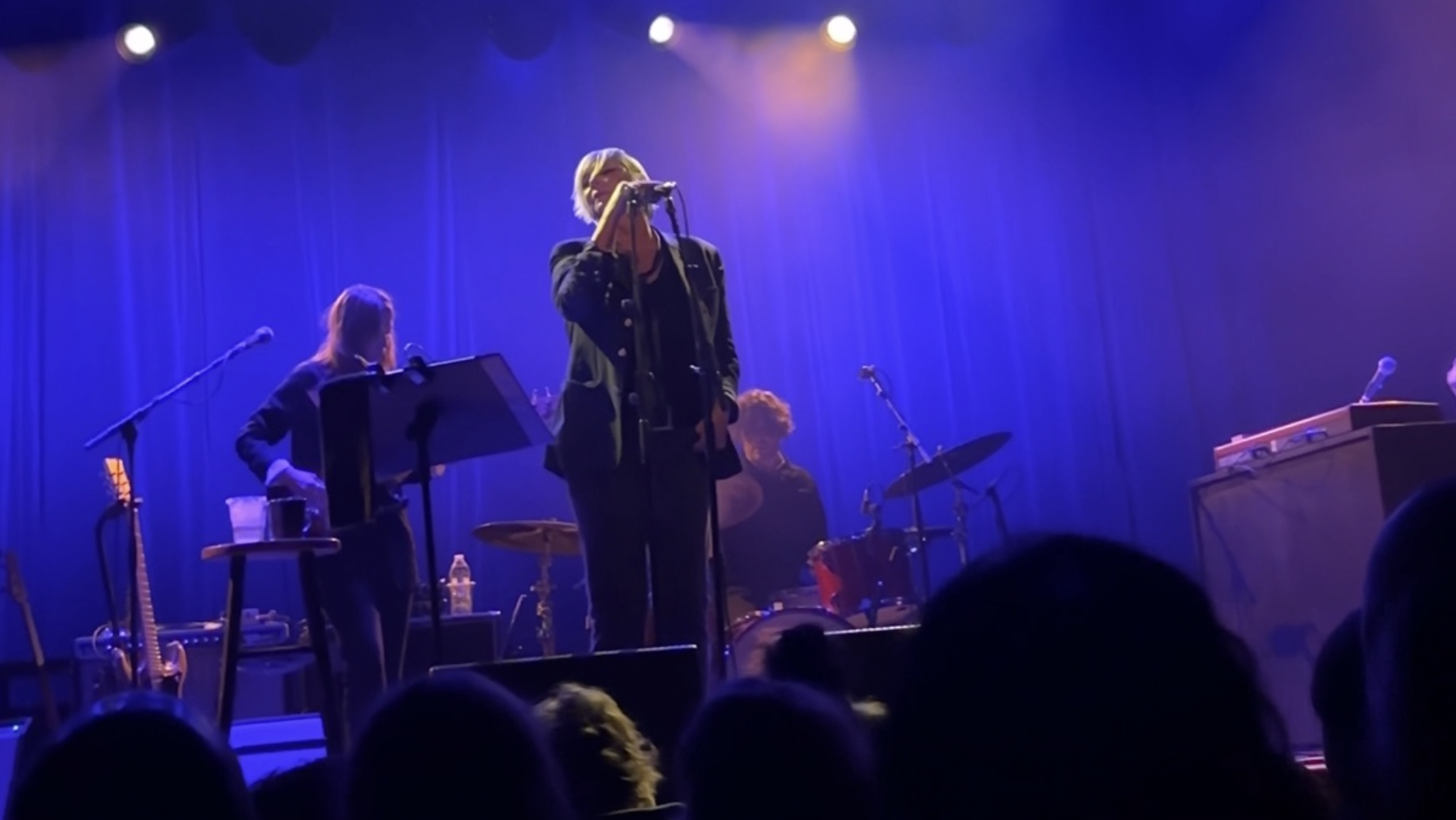
Cat Power, a.k.a. Chan Marshall, performing at the Elm in Bozeman in August.
Last week, Aaron and I went to see Cat Power at the Elm in Bozeman. She performed her 2006 album, The Greatest, in its entirety, followed by a captivating second set of covers. I can't remember the last time I saw a performance that felt so raw, real, and vulnerable.
Over plastic cups of beer before the show, a friend mentioned that Cat Power, a.k.a. Chan Marshall, has struggled for years with stage fright. That sent us down a rabbit hole about our own relationships with being seen.
"Imagine being that wildly talented, and yet sharing it with the world crushes you."
When she took the stage, she seemed both completely at ease and deeply uncomfortable. She spoke to a room full of strangers like we were old friends, while her body told another story. She drifted in and out of a crouch, shoulders lifting toward her ears, crossed her arms between her legs, and tucked her hands into her pockets.
Her voice carries those same contradictions. It's deep, husky, and weathered, with something soft and almost angelic floating just beneath it. She even sings into two microphones at once.
The performance was far from polished. She skipped a song, stumbled over lyrics, and motioned to the sound and lighting crews when something needed adjusting.
But by the time she closed with "I'll Be Seeing You," somehow channeling what felt like five different singers in one song, the room sat in stunned silence.
I ran into my friend Tyler after the show. We hugged, circled up with the group, and all landed on the same sentiment: "I cried so many times." "I needed that."
The gift she gave through her vulnerability was release. It lifted the lid off the pressure cooker we all seem to be living inside, a culture that encourages us to hide our tenderness, smooth our wrinkles, shrink our bodies, and package ourselves into something more polished, more successful, more perfect.
You could feel how much that performance cost her.
On the drive home, Aaron and I talked about how much we ask of artists: to reopen the same wounds again and again so the rest of us can feel something, too.
Too often, we wring the tenderhearts dry.
So maybe the point is this: if many hands make light work, then maybe many vulnerable hearts can lighten the emotional load, too. We could share the burden ourselves. A little more raw. A little more messy. Maybe then the pressure never has a chance to build so high in the first place.
I'm coming to believe it's thee way to fight the machine. After all, it's hard to be used as a complicit cog in the wheel when you're made of mush!